 Gocta Waterfall Tours
Best Time to Visit Gocta Waterfall, Month by Month
Last reviewed August 2026
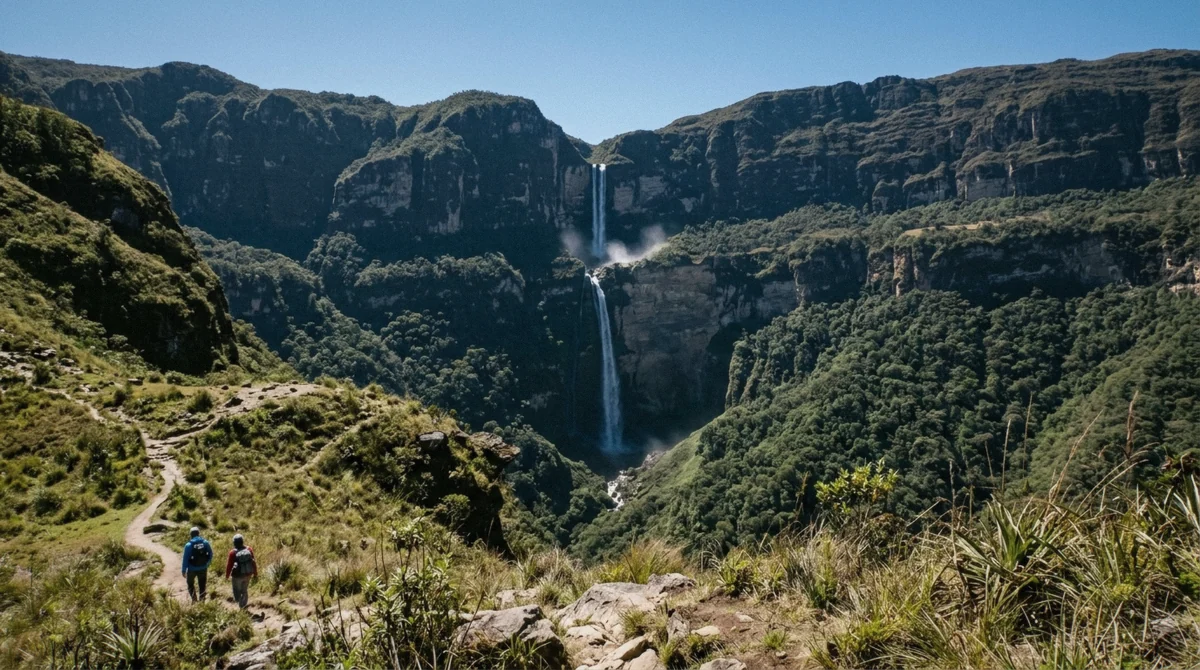
The best time to visit Gocta waterfall depends on what you want more: maximum water or a firm, dry trail underfoot, because in Chachapoyas the temperature barely moves across the whole year. Ten-year averages from 2015 to 2024 put March as the wettest month at about 182 mm and July as the driest at about 18 mm, while daytime highs sit in a narrow band of 20 to 22 °C in every single month. December to March gives you the fall at its fullest and the trail at its muddiest; June to September flips that trade, firmer footing and clearer air over a visibly thinner curtain of water. April to June is the compromise most local guides quietly point travellers toward. None of this affects whether the fall runs at all: it is perennial and never dries up, which is why operators run Gocta waterfall tours from Chachapoyas in all twelve months.
Quick answer
There is no single best month at Gocta, because the choice is between water volume and trail conditions rather than warm versus cold. December to March brings the fullest fall and the deepest mud; June to September brings the firmest trail and the clearest air, over a visibly thinner curtain of water; April to June splits the difference and is what most guides recommend if you have no strong preference either way.
Key takeaways
- March averages about 182 mm of rain, the wettest month of the year, and July about 18 mm, the driest
- Daytime highs run 20 to 22 °C in every month, so this is a decision about water and mud, not warmth
- December to March hides the upper tier behind low cloud for hours at a time. See the height and the two tiers
- The fall is perennial and never dries up. Tours depart every morning of the year, whatever the rainfall
- April at about 92 mm and May at about 65 mm are the shoulder months most guides quietly recommend
- Whichever month you pick, what to pack barely changes: a rain jacket belongs in the bag regardless
Rainfall Is the Only Variable That Matters
Why temperature isn't the deciding factor
Most best-time-to-visit questions turn on temperature. Gocta's don't. Daytime highs sit in a narrow band of 20 to 22 °C across every month of the year, cloud forest at this elevation simply does not swing hot and cold the way lowland or coastal Peru does. What genuinely changes month to month is rainfall, and rainfall in turn drives three separate things: how much water comes over the lip of the 540 m lower tier, how often low cloud sits in the valley and hides the upper tier, and how deep the clay gets underfoot on the trail.
That means the best time to visit Gocta waterfall is really a question about which of those three you care about most, not a question with one universally correct answer.
This is worth stating plainly because most travel planning defaults to hunting for a single warm, dry window and avoiding everything else. Gocta doesn't reward that approach. There is no month here that is uncomfortably cold, and there is no month where the trail closes or the fall stops running. The real planning question is closer to a trade than a search: how much mud are you willing to walk through in exchange for how much water you want to see coming over the edge, and how much do you care about a clean, unclouded view of both tiers at once.
Month by Month
Ten-year averages for Chachapoyas, 2015 to 2024. Treat every figure as typical rather than a forecast for your specific dates.
The full year
March sits well above every other month at about 182 mm; July is the low point at about 18 mm. The gap between the two is the whole story of the Gocta seasons in one comparison.
| Month | Rainfall (10-yr avg) | Daytime high | Verdict |
|---|---|---|---|
| January | 140 mm | 20°C | Wet, expect real mud |
| February | 139 mm | 21°C | Wet, similar to January |
| March | 182 mm | 21°C | Wettest month, most water |
| April | 92 mm | 20°C | Shoulder, near dry-season footing |
| May | 65 mm | 21°C | Shoulder, the quiet favourite |
| June | 33 mm | 20°C | Dry, firm trail begins |
| July | 18 mm | 20°C | Driest month, best footing |
| August | 26 mm | 21°C | Dry, clear air |
| September | 41 mm | 22°C | Dry, hotter in open sections |
| October | 103 mm | 21°C | Shoulder, rains returning |
| November | 94 mm | 22°C | Shoulder, similar to October |
| December | 130 mm | 21°C | Wet season begins |
Three windows at a glance
For anyone skimming straight to a decision, here is the same information collapsed into three choices.
| Window | Months | What you get | Trade-off |
|---|---|---|---|
| Maximum water | December to March | The fall at its loudest and widest | Deepest mud, upper tier often lost in cloud |
| Maximum trail | June to September | Firm footing, clearest air | Visibly thinner curtain of water |
| The compromise | April to June | Near wet-season volume, near dry-season footing | Neither extreme, which is exactly the point |
December to March: Maximum Water
The fall at full volume
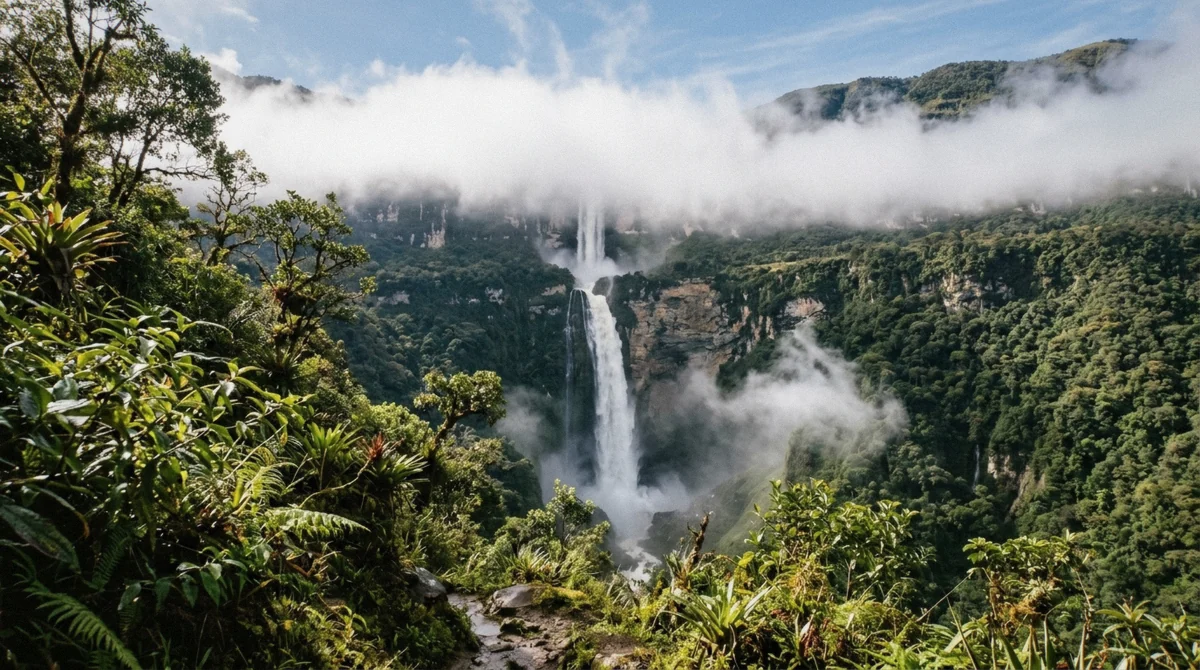
March, averaging about 182 mm, is the wettest month of the year in Chachapoyas, and December through February all sit close behind it at 130 to 140 mm. This is Gocta at its most dramatic: the 540 m lower tier runs at full volume, the roar carries further up the trail, and side streams that barely exist by July become small waterfalls of their own crossing the path.
The cost is footing and visibility. The clay trail turns genuinely greasy in these months, the return leg gets noticeably slower, and low cloud sits in the valley often enough that the upper tier disappears from view for hours at a stretch. If a clean photograph of both tiers together matters more to you than raw volume, this is not the window for it. All three tours, including the full-day hike from LIMA INCA TRIPS, keep running through these months regardless.
June to September: Maximum Trail
The trail at its best
July, averaging about 18 mm across the entire month, is as dry as this part of Amazonas gets. The clay path is firm rather than slick, the air is noticeably clearer, and the upper tier stays visible far more reliably than in the wet months. September edges warmer, running about 22°C on the days that matter, and the open cane-field sections at the start and end of the trail feel it more than the shaded forest does.
The fall is visibly thinner in these months, but it is never reduced to a trickle. Gocta is a perennial waterfall fed year-round by Andean cloud-forest rainfall, and the 540 m drop does not stop being enormous just because less water is coming over it. If the hike and a clear view of both tiers matter more to you than volume, June to September is the window. The bilingual-guide tour notes that birdwatching at the base works best in clear morning air, which these months deliver more reliably than any other stretch of the year.
April to June: the Compromise
What most guides quietly recommend
April at about 92 mm and May at about 65 mm sit on the shoulder between the two extremes. The rains have eased from their March peak, but the catchment upstream is still holding plenty of water, so you get close to wet-season volume falling over the lip while walking on close to dry-season footing underfoot.
Because temperatures barely move across the year (that same 20 to 22°C band shows up in every month), the shoulder months don't ask you to trade comfort for anything. They simply avoid both the deepest mud of December to March and the thinnest water of June to September, which is exactly why local guides point undecided travellers here more often than anywhere else on the calendar.
October and November sit on the other shoulder of the calendar, at about 103 mm and 94 mm, as the rains build back up after the dry-season low. They offer a similar compromise to April and May, though moving in the opposite direction: firmer ground than the wet-season peak still to come, with water levels rising back toward the fuller version of the fall. A traveller choosing between the two shoulder windows has little reason to prefer one over the other on conditions alone, so the deciding factor is usually just which end of the year fits the rest of the trip.
Time of Day, Cloud and the Upper Tier
Morning has the clearest odds
Cloud tends to build through the valley as the day warms, so morning generally offers the clearest chance of seeing the upper tier of the fall, particularly in the wetter months when afternoon cloud is more likely to settle in and stay. This is one reason tours depart Chachapoyas in the morning in every season: rain does not cancel a Gocta trip, it only changes the footing, and starting early gives the best odds of clear air at the viewpoints before any cloud has had time to build.
There is no guarantee attached to any of this. Cloud forest earns its name honestly, and even a clear dry-season morning can hand you a curtain of mist for twenty minutes before it lifts again.
The practical consequence for planning is small but real: whichever month you travel in, treat the morning departure as an advantage rather than an inconvenience, even if an earlier alarm is not your preference on holiday. Groups that leave Cocachimba later in the day, whether by choice or because of a delayed pickup, more often report cloud sitting over the upper tier by the time they reach the viewpoints, particularly from December through March when afternoon cloud build-up is at its most reliable.
Does the Fall Ever Dry Up?
No, and this is why
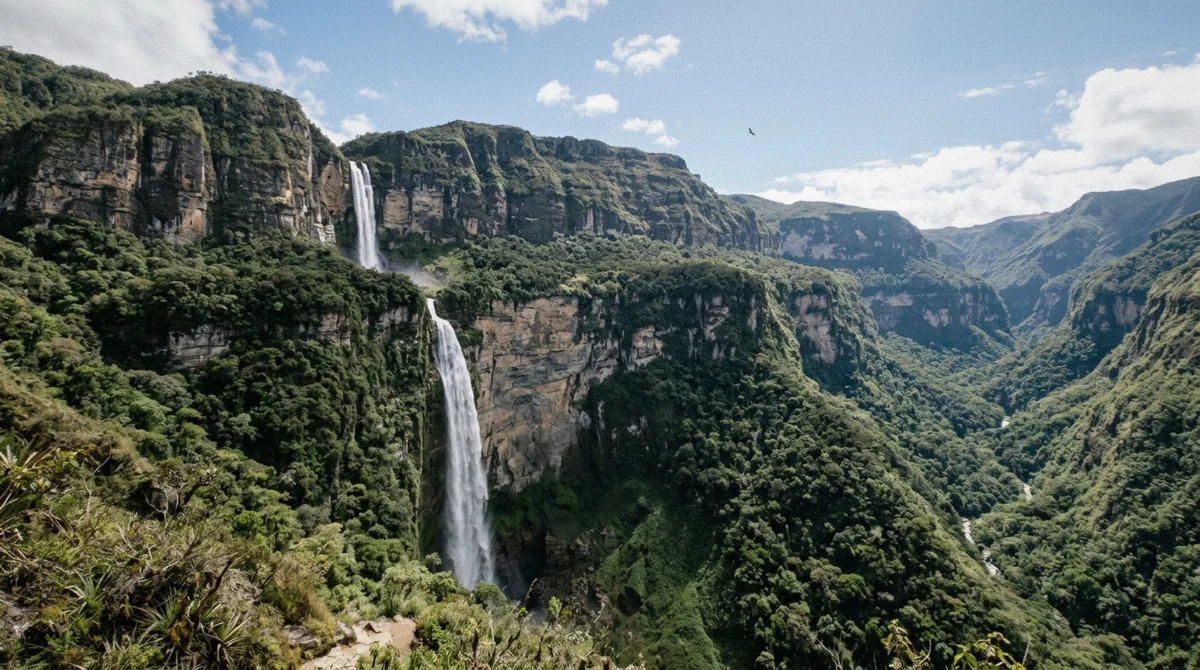
Gocta is perennial. It is fed year-round by rainfall across the Andean cloud forest catchment above it, not by seasonal snowmelt or a river prone to running dry in the driest months. That is precisely why operators sell the trip in all twelve months rather than closing the route for a low-water season the way some seasonal waterfalls do elsewhere.
What changes month to month is volume, not existence. Even in July, the driest month on record for this stretch, the 540 m lower tier is still an enormous column of falling water, simply a visibly thinner one than the version that runs in March.
This distinction matters for anyone weighing a trip against a fixed travel window rather than a flexible one. A traveller with only a single week available in, say, August has no real reason to reshuffle other plans chasing a wetter month elsewhere on the itinerary. The fall will be there, it will be dramatic on any day of the year, and the difference between a July visit and a March one is a matter of degree rather than a choice between seeing the waterfall and not seeing it.
When Tours Do and Do Not Run
Every month, rain or not
Tours depart from Chachapoyas in the morning in every season of the year. Rain does not cancel these trips; it changes the footing and, in the wettest months, the odds of a clear view of the upper tier, but the trail itself stays open and the operators keep running. None of the three tours compared on this site states a seasonal closure or a rain-dependent cancellation policy, including the $44 trip with lunch in Cocachimba, which schedules the longest time at the fall of the three regardless of month.
The practical upshot is that timing your visit is entirely about which trade-off you'd rather make, water versus trail, not about whether the trip is available at all. Whichever month lands on your itinerary, it is worth reading how the hike itself actually feels underfoot before you commit, covered in full on the Gocta hike difficulty guide.
There is no wrong month to see Gocta, only a different version of it. December to March gives you the loudest, fullest waterfall on the muddiest trail; June to September gives you the clearest views and the easiest walking over a thinner curtain of water; April to June splits the difference for anyone who would rather not choose. Pack for rain whichever one you land on, because cloud forest keeps its own schedule regardless of the season chart.
Best Time for Gocta: Questions Travellers Ask
Which month has the most water at Gocta falls?
March, which averages about 182 mm of rain across the ten years from 2015 to 2024 and is the wettest month recorded for Chachapoyas in that period. December through February run close behind it.
When is the trail driest at Gocta?
July, averaging about 18 mm of rain, is the driest month, and the firm footing extends across June to September more broadly. This is also when the upper tier stays visible most reliably.
Is Gocta waterfall worth visiting during the rainy season?
Yes, if volume matters more to you than mud. December to March gives you the fall at its fullest and loudest, at the cost of a slicker trail and more hours where low cloud hides the upper tier.
Does the temperature at Gocta change much by season?
Barely. Daytime highs sit in a narrow 20 to 22°C band in every month of the year, so the seasonal decision here is genuinely about water and mud, not about warm versus cold weather.
Which months have the least rain at Gocta?
June through August, with July the single driest month at roughly 18 mm. September starts to warm up and see slightly more rain again as the shoulder season approaches.
Do I need to check the forecast before booking a Gocta tour?
It helps but is not essential. Tours run in every month regardless of rain, and the fall itself is perennial, so a wet forecast changes what you'll see and how the trail feels rather than whether the trip goes ahead at all.